
The World Cup draws viewers from all over the world and is one of the few events that captures imaginations worldwide. Technology is changing how football fans experience the World Cup. This includes creative videos and fan content. But AI tools can also make scams harder to spot, especially when fake content looks and sounds believable. Fans need to be more aware of these AI-powered threats than ever before.
What you need to know:
- AI can create realistic World Cup images, videos, voices, websites, and messages.
- Not all AI-generated football content is malicious, but it can be used to deceive fans.
- Scammers may use fake highlights, deepfake endorsements, cloned voices, and AI-written phishing messages.
- Visual or audio clues are not always reliable, so context matters more than ever.
- The safest habit is to verify the source before clicking or sharing.
Why is the World Cup a prime target for AI-powered scams?
The FIFA World Cup attracts global attention before a ball is even kicked. Fans search for tickets, livestreams, highlights, team news, travel deals, accommodation, merchandise, and giveaways, often in a hurry and across multiple platforms.
That surge in demand creates the perfect environment for cybercriminals. Scammers can exploit urgency and limited availability. Some customers will make poor decisions out of desperation or not thinking things through properly.
Why cybercriminals target the world’s biggest football event
Cybercriminals follow attention. Millions of fans are tuned into the World Cup every four years. They may be searching for match tickets or travel information. They might just be checking out highlights and team news.
All of these activities provide opportunities for scammers. They may place fake ads, send phishing messages, impersonate trusted brands, or launch fraudulent streaming pages targeting those searching for World Cup news and information or chatting about games on social media. Fraudsters know people are looking for information and coverage of the World Cup games and may find their fake content.
This leads to an environment where scams can spread quickly and look polished enough to fool even tech-savvy fans.
What kinds of AI-generated content should World Cup fans recognize?
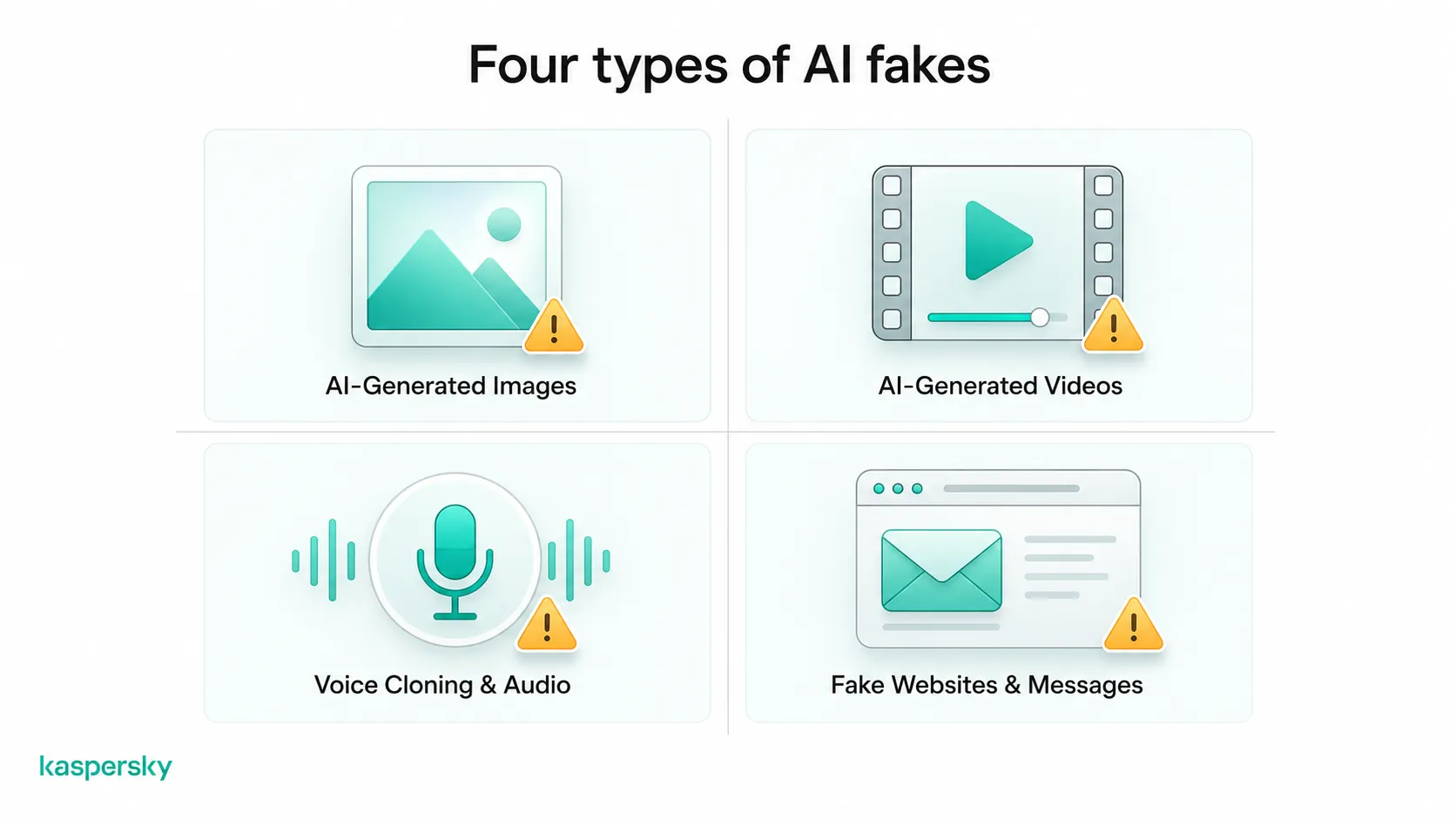
Artificial intelligence can now generate a variety of content. This includes videos, audio, websites, and written content that closely resemble real people and organizations.
Understanding the different types of AI-generated content makes it easier to recognize what you're looking at and question whether it is genuine before reacting or sharing it.
AI-generated World Cup images
AI image generators can create highly realistic pictures from a simple text prompt. They can produce scenes that never happened and modify existing photographs.
A recent example saw a widely-circulated fake image purporting to be British Prime Minister Keir Starmer wearing a Croatia shirt. England played Croatia in their opening fixture.
There have also been realistic-looking stadium photos, crowds, fan celebrations, player portraits, promotional graphics, and altered images that appear to show real events.
Some AI-generated images are created for entertainment or marketing but it is becoming increasingly difficult to tell them apart from genuine photographs at a glance.
AI-generated World Cup videos
AI-generated videos or deepfakes use machine learning to create or alter footage so that people appear to say or do things they never actually did.
The technology can generate realistic interviews, press conferences, or public announcements using convincing facial movements, lip syncing, and natural speech. Improvements in AI models mean many videos now look far more realistic than those seen just a few years ago. It makes visual content alone a less reliable indicator of authenticity.
We have already seen a fake video of a fan entering the field to hug superstar Lionel Messi. The video was widely circulated on X in spite of being AI-generated.
AI-generated audio and voice cloning
Voice cloning uses AI to recreate the sound of a person's voice from relatively short audio samples. These systems can generate entirely new speech that closely matches the speaker's tone and accent.
This technology can be used to create narrated videos and accessibility tools. But it also means that hearing a familiar voice is no longer reliable proof that a recording or phone call is genuine. Public interviews as well as other coverage like podcasts and livestreams all provide audio that can be used to train voice models.
AI-generated websites and messages
AI can produce polished websites, messages, and social media posts within seconds. AI-generated content often uses natural language and convincing layouts that make it much harder to spot. There are plenty of ‘copycat’ sites that are made to look like official FIFA websites.
Many phishing messages no longer contain the spelling mistakes or awkward grammar that once made them easier to identify. AI allows attackers to generate professional-looking content that closely matches the tone and style of legitimate organizations and is free of errors.
How are scammers using AI during the World Cup?
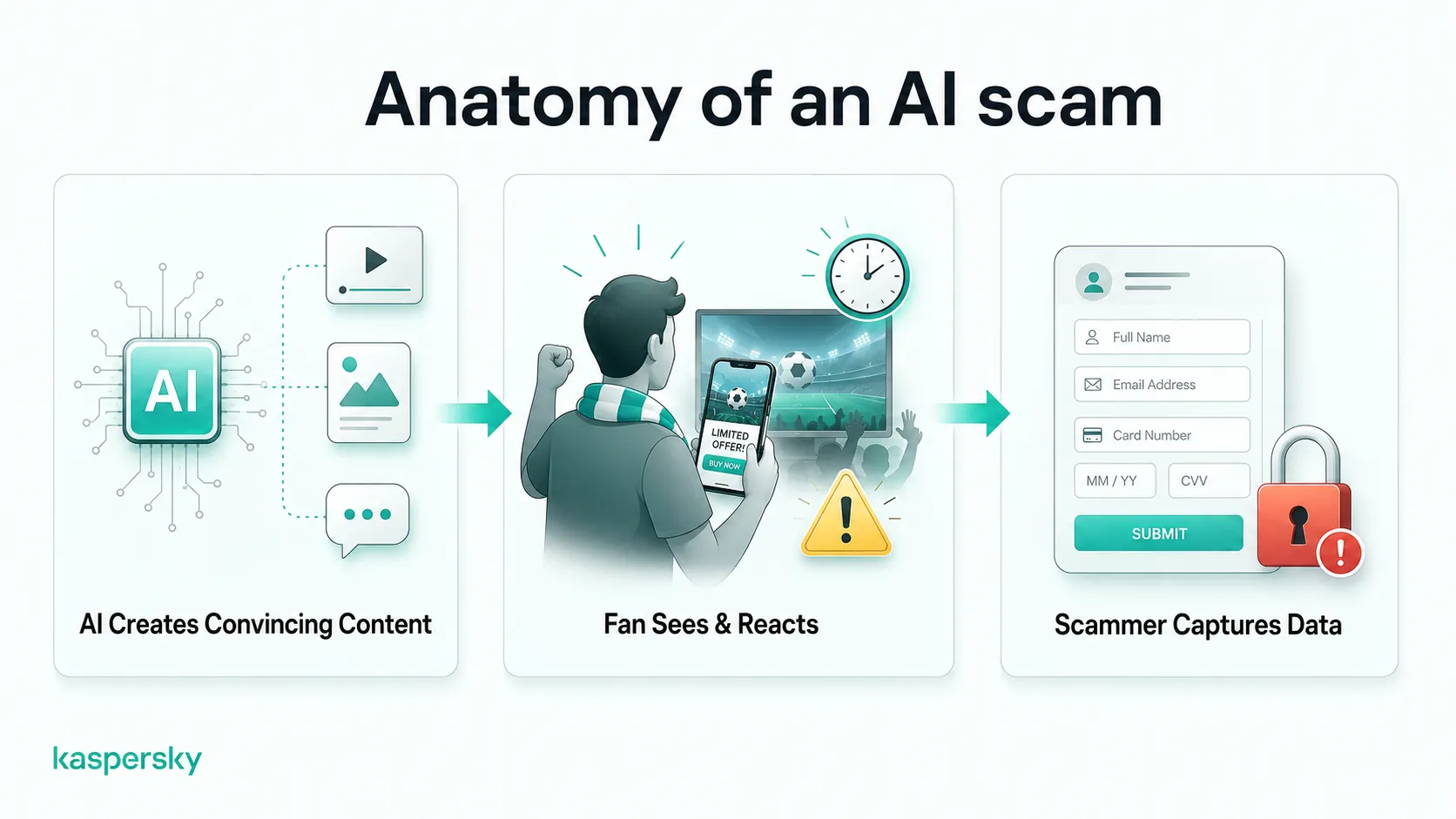
Cybercriminals are using AI to make familiar scams more convincing and personalized.
The danger comes from how scammers use this improving technology to exploit excitement and trust during one of the world's biggest sporting events.
Fake World Cup giveaways and celebrity endorsements
AI-generated videos and images can make it appear as though football players, commentators, influencers, or celebrities are promoting exclusive giveaways or competitions.
These scams often encourage fans to act quickly by claiming prizes or promotions are only available for a short time or that places are limited. Clicking the link usually leads to a fake website designed to collect personal information or payment details rather than deliver the promised reward.
Fake World Cup highlights and viral videos
Scammers can combine footage with AI-generated commentary and edited clips to create convincing match highlights or breaking videos that never actually happened. People are constantly looking for highlights of the recent games.
Some claim to show controversial incidents or leaked post-match interviews to encourage clicks and shares. Even the opening ceremony saw fake content claiming the Iranian team arrived with an elaborate gold float. This was debunked, but has hundreds of thousands of views.
These fake videos often redirect viewers to malicious websites or social media accounts designed to spread further scams.
Fake World Cup news and misinformation
AI allows false stories to be created and shared almost instantly. Fake tournament announcements and news can be combined with misleading match updates. These spread rapidly across social media and messaging apps.
Because major sporting events generate constant and shocking breaking news, sensational claims often spread before they can be verified. A viral video of Erling Haaland supposedly getting shocked by his reflection was also AI generated.
Taking a moment to check official sources before sharing unexpected stories can help prevent misinformation from spreading even further.
Fake World Cup identities and conversations
AI can generate convincing online identities complete with realistic profile photos, natural conversations, and consistent posting histories. Scammers use these fake accounts to build trust before promoting fraudulent and harmful materials.
The technology makes it much easier for scammers to seem legitimate. Some attackers also use AI-powered chatbots or voice cloning to imitate customer support, travel companies, streaming providers, or even people the victim knows. These conversations may feel genuine. Their goal is usually to persuade users to reveal sensitive information.
AI isn't always malicious
It's important to remember that AI-generated content isn't inherently deceptive. Plenty of people use AI to produce entertaining videos or graphics. There are even AI-generated games and interactive experiences.
Some of the visuals generated do not try to deceive. They may feature comedic content, like this video of several teams enjoying their hydration break. These visuals can be harmless if creators are honest about their origins and do not use them to mock or deceive.
Videos may also be created without malice and to celebrate players or put them in new scenarios. An AI image of Messi playing Quidditch rather than football is an example of AI-generated footage that is not purporting to be real.
The video below is another example. Its makers are honest about it being AI-generated, but it still celebrates players and puts them in imagined scenarios. It is not about tricking people.
How can you tell if AI-generated World Cup content might be misleading?
There is no single trick that reliably identifies AI-generated content anymore. The technology has improved quickly. Many fake images and voice recordings no longer contain the obvious flaws they once did.
Instead of trying to "spot the fake" based on appearance alone, focus on the overall context. Ask whether the content makes sense. Consider if it matches what you already know and whether it seems designed to provoke an immediate emotional reaction. Healthy scepticism is often more effective than looking for technical imperfections.
Look for visual inconsistencies
Some AI-generated images and videos may still contain subtle visual clues. These can include inconsistent lighting, blurred edges around faces, unnatural hand or body movements, distorted backgrounds, or objects that change shape between frames.
Text in the background is something that AI also struggles with. Brand names on advertising boards or other words may get distorted when AI tries to reproduce them.
However, these are only indicators, not proof. High-quality AI-generated content may show few visible flaws. Genuine videos can also appear distorted because of compression or low-quality recordings. This blurs the lines further.
Listen for unusual speech patterns
AI-generated voices can sound remarkably natural. Some recordings may still include small inconsistencies. Unnatural pauses, slightly robotic pacing, missing breathing sounds, or emotions that don't match the situation can all be warning signs.
That said, voice cloning technology is becoming more accurate. A familiar voice should no longer be treated as proof that a recording or phone call is genuine. Consider the overall context rather than relying on audio alone.
Look beyond the content itself
The strongest warning signs are often found in the message rather than the media. Ask yourself why the content was shared and what it wants you to do next.
Be especially cautious if a post makes extraordinary claims, appears unusually soon after a major event, or creates a sense of urgency with phrases like "watch before it's deleted," "exclusive leak," or "claim your prize now." Scammers often rely on fear or urgency to encourage people to click before they have time to think.
How can you verify World Cup content before taking action?
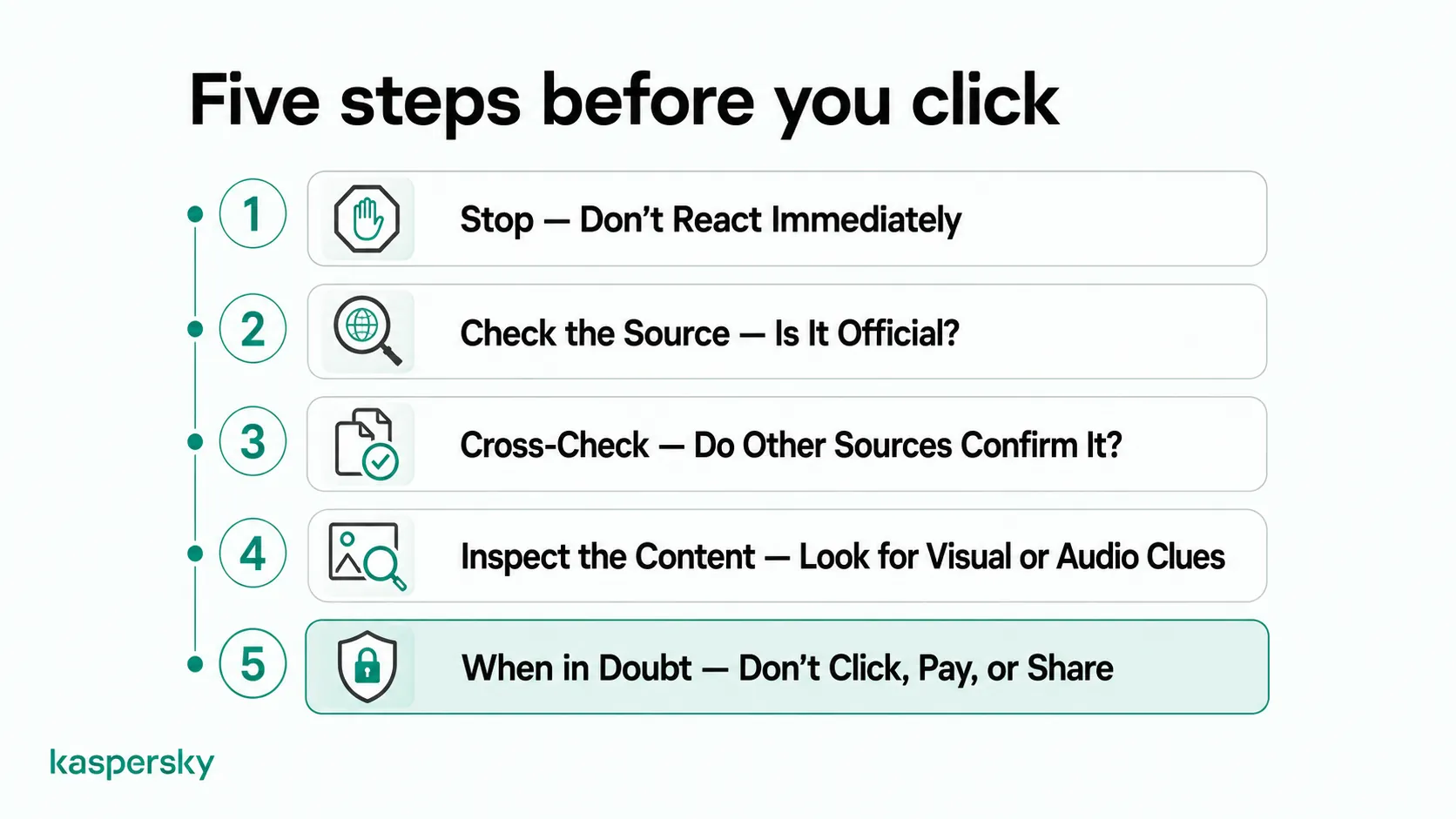
A key defence against AI-powered scams is verification. Take a moment to confirm that the content comes from a trusted source before you take any action.
This simple habit can prevent phishing attacks and other scams that rely on people acting before they have time to think.
Verify the FIFA World Cup source
Start by checking who published the content. Official FIFA channels and verified broadcaster accounts, national football associations, and established news organizations are the safest places to find tournament information.
If a post includes a link, avoid clicking it immediately. Type the official website address into your browser or open the broadcaster's official app to confirm the information directly.
Verify World Cup information
If something seems important or unexpected, check whether other trusted sources are reporting the same story. Major announcements like fixture changes are usually covered by multiple reputable outlets.
Cross-checking information only takes a few minutes. It can help prevent costly mistakes caused by AI-generated misinformation or fake announcements.
Protect yourself from malicious content
Kaspersky Premium offers various tools designed to protect you when connected. This includes protection for malicious content and viruses scammers may use the World Cup to try and push.
Protect Yourself for FreeVerify before you click, pay, or share
Before entering personal information, buying tickets or merchandise, downloading an app, or reposting viral content, pause to verify that it's genuine.
One extra verification step is often enough to stop an AI-powered scam before it succeeds.
What other World Cup scams should fans know about?
AI-powered deception is only one part of the cybersecurity risks surrounding the FIFA World Cup 2026. Cybercriminals also target fans with fake ticket sales, fraudulent streaming sites, phishing campaigns, and other scams designed to steal money or personal information.
The guides below explore two of the most common World Cup scam categories in more detail.
Fake FIFA World Cup ticket scams
AI is making fake ticket scams more convincing than ever. Criminals can create realistic resale listings with fake QR codes and convincing phishing pages that imitate legitimate sellers or tournament partners.
Learn how these scams work and what warning signs to look for in our FIFA World Cup Ticket Scams guide.
Fake World Cup streaming scams
Fake streaming sites remain one of the biggest threats during major sporting events. AI-generated promotional videos and convincing social media posts are increasingly being used to lure fans to fraudulent websites that may deliver malware or steal login credentials.
Find out how to recognize and avoid these threats in our Fake FIFA World Cup Streaming Sites guide.
What's the most important thing to remember about AI during the World Cup?
AI is changing how fans experience sporting events. This includes the FIFA World Cup 2026. Scammers have wasted no time in trying to take advantage.
The ability to generate such realistic content means it is harder for all of us to judge what is real and what is generated on a computer. Many examples of AI content look incredibly realistic. The best defence is not to automatically believe what you are viewing. We can all benefit from developing the habit of verifying information before taking action or risking personal information or money.
Trust the World Cup source, not just what you see or hear
There's nothing wrong with enjoying AI-generated football content when it's clearly presented as entertainment or creative media. But if a post asks you to click a link, make a payment, download an app, or share personal information, pause before responding.
Seeing a convincing video or hearing a familiar voice is no longer enough to prove something is genuine. The most reliable way to stay safe is to trust verified sources.
Related Articles:
- How can you protect yourself from AI phishing scams?
- How can you identify a phishing email effectively?
- How to spot fake login pages before entering your credentials?
- How can you identify scam websites effectively?
Related Products:
FAQs
Can AI create fake live World Cup broadcasts?
Yes. AI can be used to create convincing fake live streams and highlights designed to attract viewers. These broadcasts often redirect people to malicious websites.
Can scammers clone a football player's voice with AI?
Yes. AI can clone a person's voice using publicly available audio from interviews, podcasts, or videos. Scammers may use these cloned voices in fake promotions, giveaways, or other deceptive content.
Why are AI-generated World Cup scams becoming more common?
AI tools make it faster and cheaper for criminals to create realistic content and messages at scale. This allows them to launch more convincing scams that are harder to distinguish from legitimate World Cup content.


