
Reports of sextortion have climbed in recent years, and it isn't only a risk to teenagers. The FBI's Internet Crime Complaint Center alone logged more than 75,000 sextortion-related submissions in 2025. The real figure is almost certainly higher, since the FBI acknowledges that many victims don’t report the crime.
What is sextortion?
Online sextortion is blackmail with intimate images. Someone threatens to publish sexual photos or video of you, whether authentic or AI-generated, unless you pay, send more images, or perform sexual acts on camera.
The blackmailer might be a stranger who spent a week building a fake profile before asking for pictures, or an ex who already has them. Either way, the threat is that your family, your coworkers, and your friends will see the pictures.
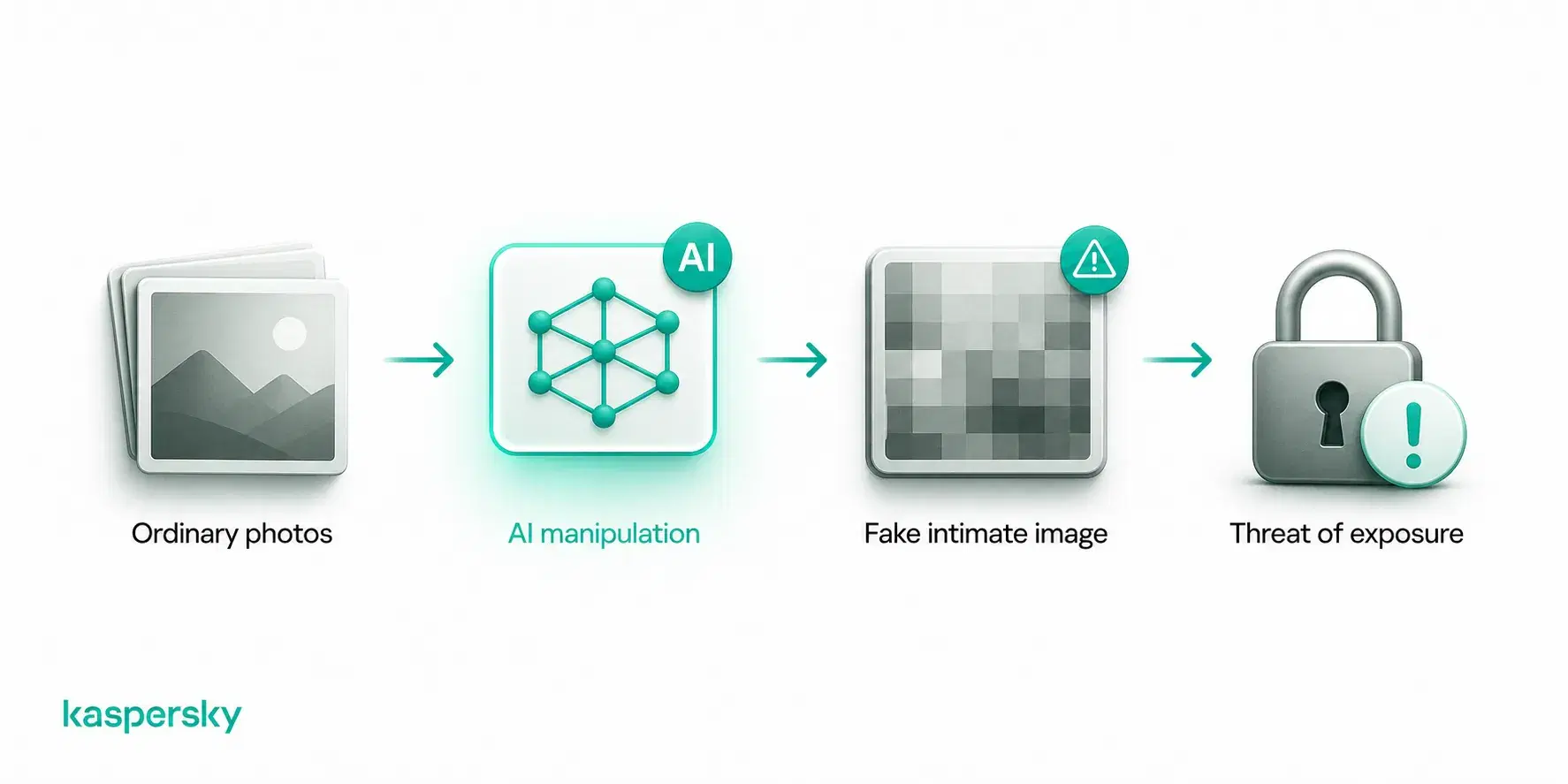
Anyone can be a target of this form of extortion, from fourteen-year-olds on gaming and chat platforms to sixty-year-olds on dating apps. The blackmailer might have a recording you never knew was being made, a photo you sent a partner years ago, or a fake image created with AI from ordinary photos of you. Manipulated content can still be used to threaten or embarrass victims.
Most countries treat sextortion as a serious cybercrime, though the charges and penalties depend on where it happens and on the details of the case, particularly the age of the victim. Many police forces and cybercrime units have dedicated channels for reporting it.
- Sextortion is blackmail: someone threatens to share intimate images of you, real or AI-generated, unless you pay or send more.
- You don't have to have sent anything. AI tools build convincing fakes from ordinary social media photos.
- Webcam-hacking emails may be bluffs, built on a password lifted from an old data breach.
- Don't pay and don't reply. Paying is unlikely to stop the demands.
- Screenshot everything first: messages, usernames, profile links, payment details. Then block, and report to the platform and the police.
- Teenagers are common targets, and fear of punishment may stop them from telling anyone.
- Removal is free: StopNCII.org for adults, NCMEC's Take It Down for under-18s.
How does sextortion work?
Sextortion scams often follow a pattern:
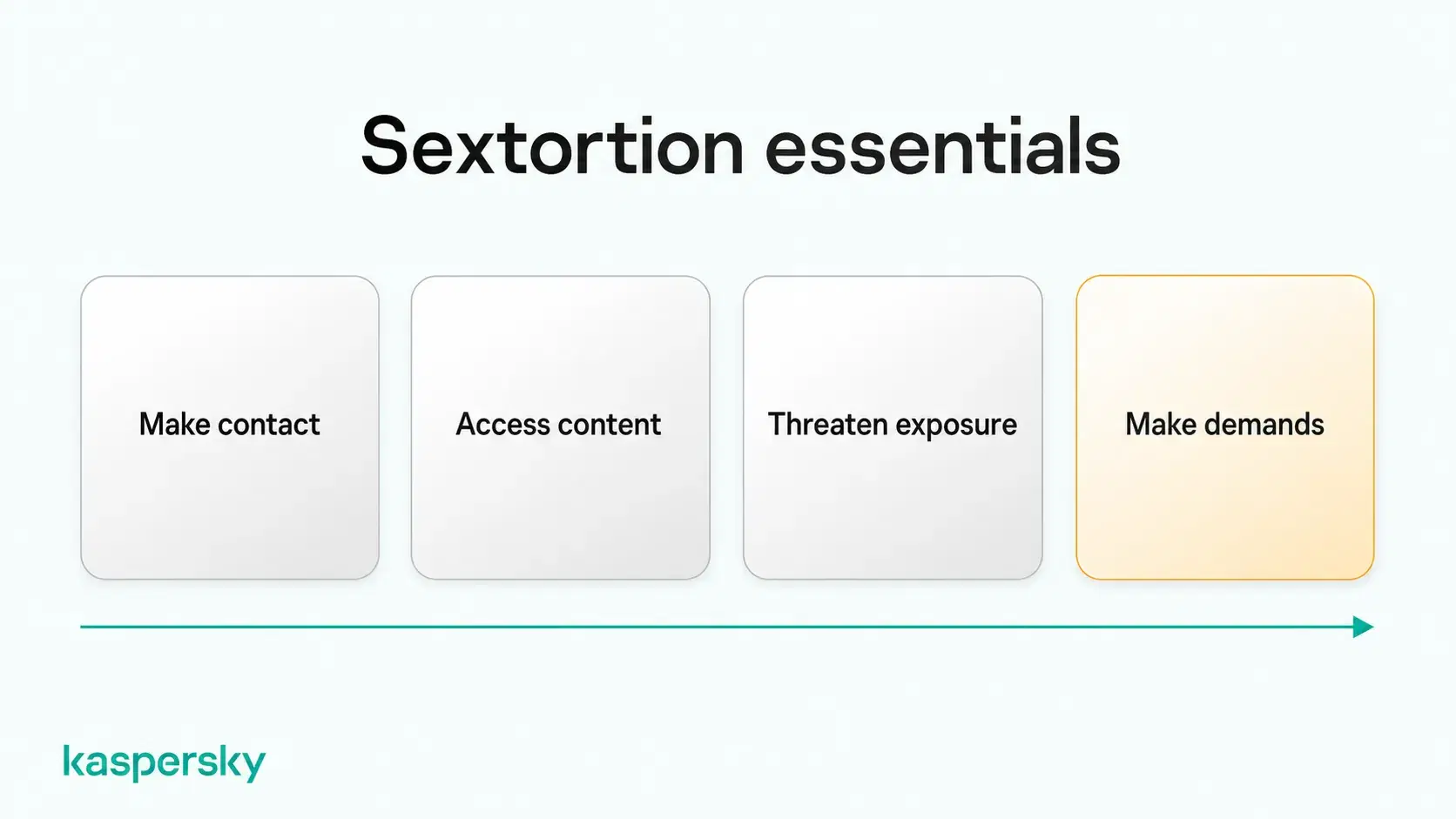
Stage 1: Make contact
In some cases a new account approaches you, often opening with a compliment or an interest copied from your profile. In other cases there's no approach at all, because the perpetrator is already a partner, an ex, or someone you know.
Stage 2: Access content
Some people send images willingly once the conversation warms up. Others are recorded during a video call without realizing it, or lose photos when their email or cloud storage is hacked. An AI tool can also put your face onto intimate images, so you can be targeted without ever having sent anything.
Stage 3: Threaten exposure
Once they have something to use, the friendly conversation stops. The perpetrator will usually tell you who will receive the content, whether that's your followers, your parents, or the people you work with, and will often prove they know who those people are.
Stage 4: Make demands
They may demand money, often in cryptocurrency or gift cards, or pressure you to send more intimate content. The demand may come with a deadline designed to make you act quickly without thinking it through.
Financial vs. sexually motivated sextortion
A financial sextortion scheme ends in a demand for money. Organized groups run many of these cases at once, and the person typing to you may be working from a script that thousands of other people have already been sent.
A sexually motivated sextortion scheme demands more images, videos, sexual acts performed on camera, or continued contact on the perpetrator's terms. This is a form of sexual coercion in which the perpetrator seeks continued access to or control over the victim.
What are the warning signs of sextortion?
Sextortion blackmail happens on social media, dating apps, gaming platforms, and messaging services, so look at how the other person behaves rather than where you met them. One sign on its own may mean nothing, but several together may mean you're being set up.
Watch for these signs:
- The conversation turns sexual quickly. Within a few messages the topic has moved from your dog to what you're wearing.
- Their identity doesn't hold up. The account is new or has few posts, and the person avoids live video calls or only appears in clips that look prerecorded.
- They send an intimate photo and ask for one in return. The photo may not be of them at all, and sending one first is a way of making the exchange feel fair and mutual.
- They want to move the chat to another app. They'll suggest a messaging service where photos disappear after they are opened, or one where the site you met on can't see what's being sent.
- They ask who is close to you. If they are asking questions early on about your school, your job, or your family, it may be a way of working out who they could send your images to.
What should you do if you're being sextorted?
The perpetrator wants you to panic and act before you think. Work through these steps in order:
- Stop replying. Do not negotiate, and do not try to explain yourself. Continuing the conversation may give the perpetrator more opportunities to pressure or manipulate you.
- Do not pay. Payment is unlikely to end the demands, and it tells the perpetrator that pressure works on you.
- Save the evidence before you block anyone. Screenshot the whole conversation, the profile, the username, and the profile URL. Save any wallet addresses, payment app handles, or account numbers they sent, and note the dates. Investigators need this material, and the account may disappear soon after you report it.
- Secure your accounts. Change the password on any account that could be involved, and on every other account that shares the same password. Turn on multi-factor authentication. Check the login history and connected devices on your email and cloud storage.
- Block and report. Report the account to the platform, then report the incident to law enforcement.
- Tell someone. They can make the reports, sit with you while you deal with it, and help you avoid rash decisions.
How can you report or remove intimate content?
Report the content to the platform where it appears. Every major platform lets you report non-consensual intimate imagery, usually through the report menu on the profile or message. Where possible, report the account and the content separately.
In the United States, report to the FBI through ic3.gov or at 1-800-CALL-FBI. Elsewhere, your national police force or cybercrime unit will usually have an online form. One account often has many victims, and investigators may link cases through details such as usernames and wallet addresses.
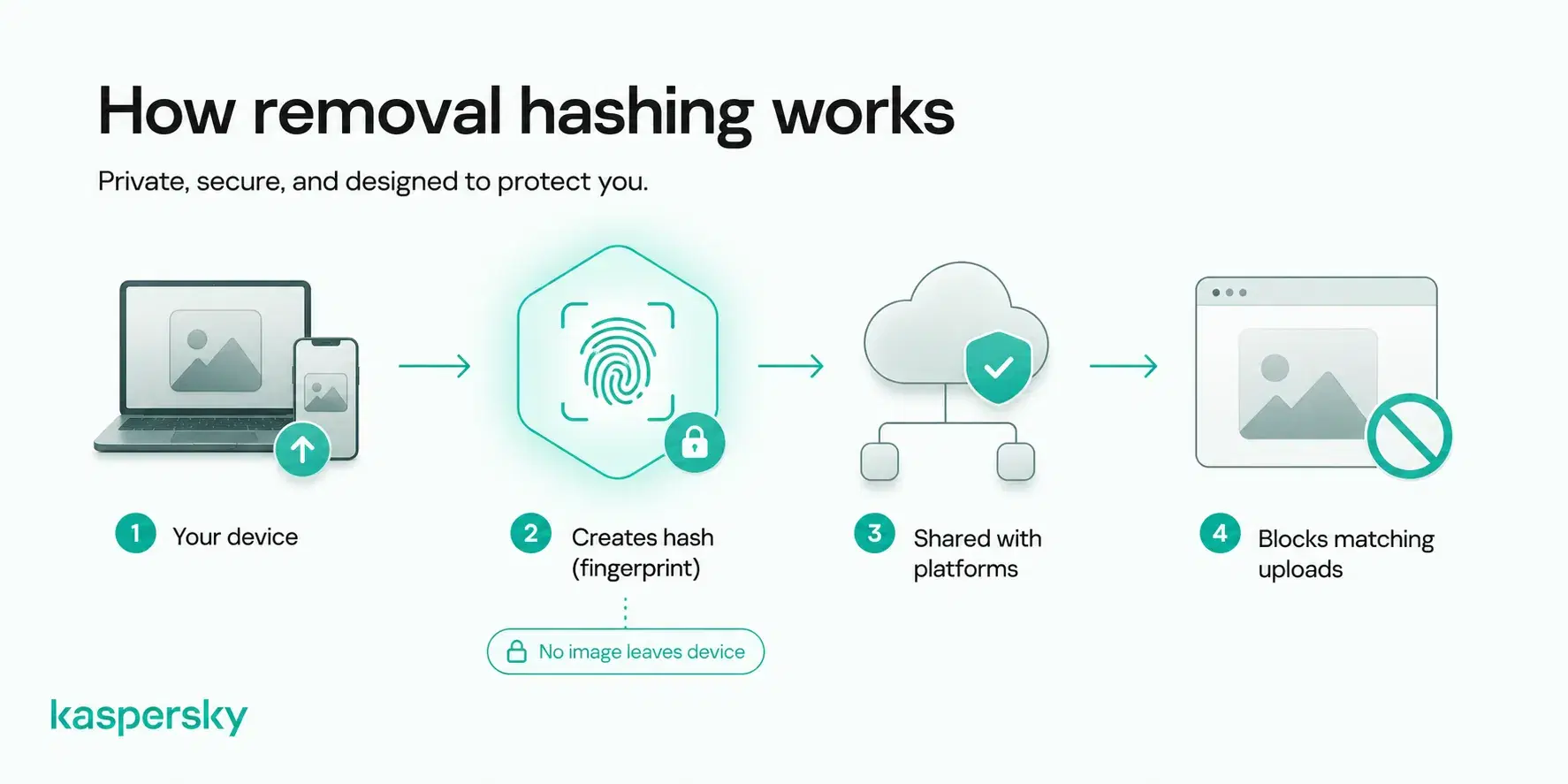
Take It Down, run by the National Center for Missing and Exploited Children, handles intimate content of anyone under 18 and of adults who were under 18 when the content was made. StopNCII.org does the same for adults. Both create a hash, a digital fingerprint of the file, on your own device. Only that fingerprint is shared with participating companies, which use it to detect and block matching uploads. Neither service requires you to send the image anywhere, and both are free.
These services can't remove copies that someone has saved to their phone or posted on a site that doesn't take part in these programs.
What is a sextortion email scam?
A sextortion email scam is an email claiming the sender has intimate images of you and will send them to your contacts unless you pay. Most are mass-mailed to thousands of addresses by senders who have no images at all.
What a sextortion email scam looks like
A common version says they hacked your device, recorded you through your webcam, and want payment in cryptocurrency. Many open with a password you recognize, taken from an old data breach and matched to your address in a leaked database.
Some spoof your own address in the From field so the email appears to come from inside your account. This is a simple trick, and the scammer doesn't need access to your account to do it.
How to tell a mass scam from a real threat
An old password, a spoofed sender address, or vague claims about compromising footage are common features of mass sextortion emails. These details alone do not prove that the sender has accessed your device or possesses intimate content.
Some threats contain specific information about previous conversations, intimate content, or your contacts. However, personal information can also come from data breaches or public profiles. If your email appears in a breach notification service such as Have I Been Pwned, this may explain how the sender obtained your details without accessing your device.
What to do
Do not reply to or pay the sender. Keep the email as evidence, and if it contains a password you still use, change it immediately. For further steps, follow the guidance below.
How can you protect yourself from sextortion?
You can't rule out the risk of internet sextortion scams completely, but you can limit what someone is able to use against you.
- Verify who you're talking to. A short live video call, or a reverse image search on their photos, filters out many fake profiles, though live face-swapping tools are getting better. If someone always has an excuse for why they can't turn their camera on, treat it as a potential red flag.
- Lock down your profiles. Perpetrators go through your followers, your school, your employer, and your family to work out who they can send the images to.
- Use a unique password on every account. Account compromise is a common route to private photos, especially through email and cloud photo backups. A password manager makes unique passwords practical, and multi-factor authentication blocks most attacks that rely on a reused password.
- Assume anything you send can be saved. A disappearing message can still be screenshotted, screen-recorded, or photographed with another device, so think carefully before sharing intimate content online.
- Keep your devices and security software up to date. Malware or stalkerware can potentially expose private files or access device features, so install security updates promptly and investigate unexpected account or device activity.
Independently tested and awarded by the industry's leading labs.



What is child sextortion and how can parents help?
Child sextortion is when someone threatens to share a child's intimate images unless they send more content or money. It's a form of child sexual abuse, and how a parent responds can make a big difference.
How child sextortion works
The approach usually looks innocent at the start. Offenders may pose as someone the same age on a game, a social app, or a messaging service, using a plausible account with a few mutual followers, and build a friendship over hours or days before asking for an image.
Once they obtain an image, the tone may change. Some offenders demand more intimate content, while others demand money. Teenage boys are frequently targeted in financially motivated sextortion schemes, which can escalate quickly from initial contact to a demand for payment.
Why children may not report sextortion
Many children don't tell an adult right away. They often feel deep shame about the image itself, fear what the offender will do with it, and expect to be blamed for sending it.
They may also assume they will lose their phone or their accounts as a punishment. Offenders use this to their advantage and may even tell the child directly that their parents will be disgusted with them, or that they'll be in trouble with the police.
What to do as a parent
If your child tells you they're being sextorted, follow these steps:
- Stay calm and tell them they were right to come to you. If you respond with anger, they may stop talking, and you need the whole picture to help them. Explain that they're not in trouble and that the person threatening them is responsible for what happened.
- Do not take the phone away. It contains the evidence you need, and losing it may make your child feel they're being punished for telling the truth.
- Do not pay, and do not send more images. If you've already paid, stop now and keep the transaction details.
- Save the evidence before you block anyone. Screenshot the messages, the profile, and any payment details.
- Cut contact with the offender. Block the account on every platform they have used, and report the account to the platform itself.
- Report the incident. NCMEC's CyberTipline takes reports online, and your local police can open a case.
- Use Take It Down. It can help stop the images from spreading on participating platforms.
- Keep an eye on how they are afterward. Children often withdraw from friends, have trouble sleeping, or start skipping school. They may refuse to talk about what happened at all. Keep checking in, and look out for signs that they're struggling.
- Find support. A family doctor, school counselor, or child protection charity can help your child work through any emotional distress. Let them know they can also reach out on their own: in the US, 988 takes calls and texts, and elsewhere Find A Helpline lists free services by country.
Related Articles:
- What should you know about one night stand scams?
- What is doxing and how does it impact online safety?
- What is catfishing and how does it affect online safety?
- What are deepfakes?
Related Products:
FAQs
How is sexting connected to sextortion?
Sexting can become connected to sextortion when someone uses shared intimate content as leverage for blackmail. They may threaten to distribute the content unless the victim sends more images, performs sexual acts, or pays money.
What role does AI play in sextortion?
AI can be used to create convincing fake intimate images from ordinary photos. Perpetrators can then threaten to share this manipulated content, meaning victims can face sextortion even if they have never created or shared genuine intimate images.
What impact can online sexual extortion have on young people?
Shame, anxiety, and fear of exposure are common, and some young people withdraw from friends, school, or family. The fear often persists long after content is removed, and sextortion has been linked to self-harm.
How can you report and remove nude images or videos from the internet?
Report the content to the platform, then use a removal service. StopNCII.org helps adults, and NCMEC's Take It Down covers anyone under 18. Both create a digital fingerprint of the image so participating platforms can block matching uploads.


